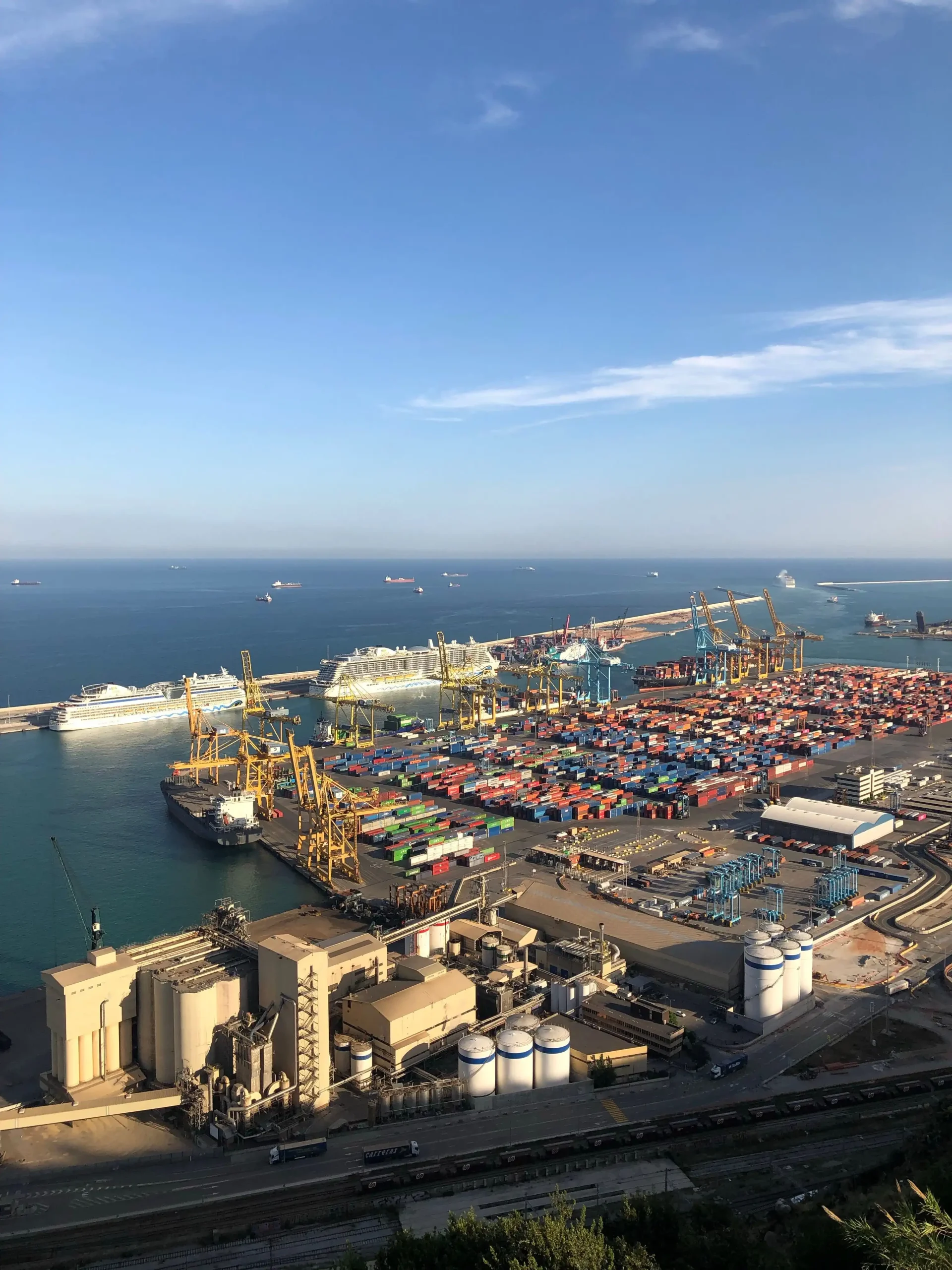
Global transportation depends on complex supply networks. Commercial vehicles may be manufactured in one country, operated in another, and maintained using components sourced from several different regions.
This global structure creates opportunity, but it also creates risk. Political disruption, customs delays, currency volatility, shipping constraints, supplier failure, and incorrect documentation can interrupt the availability of critical truck parts.
A resilient spare-parts supply chain is therefore essential for transportation companies, importers, distributors, and fleet operators. Bakamion Auto Spare Parts approaches this challenge from a practical perspective: the objective is not merely to purchase components but to create continuity of supply.
Understanding Supply-Chain Risk
Supply-chain risk can appear at several levels.
Supplier risks include:
- Production delays
- Inconsistent quality
- Financial instability
- Incorrect product identification
- Weak communication
- Dependence on subcontractors
Logistics risks include:
- Port congestion
- Shipping delays
- Cargo damage
- Lost shipments
- Route disruption
- Limited transport capacity
Regulatory risks include:
- Documentation errors
- Import restrictions
- Customs valuation disputes
- Changes in technical standards
- Sanctions or trade limitations
Internal risks include:
- Poor inventory records
- Incorrect demand forecasting
- Lack of vehicle data
- Dependence on one employee
- Emergency purchasing
- Weak supplier evaluation
A resilient system identifies these risks before they become operational emergencies.
Classifying Parts by Criticality
Not all truck parts require the same supply strategy.
A useful classification model divides components into categories such as:
- Fast-moving maintenance parts
- Safety-critical parts
- High-value components
- Rare but operationally critical parts
- Non-critical convenience items
Filters, belts, brake components, sensors, suspension parts, electrical items, and cooling-system components may have different demand patterns and consequences of failure.
Management should consider both frequency and impact. A component may fail rarely but create weeks of downtime if unavailable.
Criticality classification helps determine stock levels, approved suppliers, emergency procedures, and purchasing priorities.
Avoiding Single-Supplier Dependence
Working with one supplier may simplify communication and purchasing. However, total dependence on a single source creates vulnerability.
A supplier may face production problems, financial difficulty, regulatory restrictions, or shipping limitations. Even a reliable supplier cannot control every external risk.
Transportation organizations should identify alternative sources for critical categories. This does not mean purchasing randomly from many suppliers. It means creating a qualified supplier base with verified technical and commercial capability.
Bakamion Auto Spare Parts can support organizations as part of a diversified sourcing strategy, particularly when companies require international procurement knowledge and commercial vehicle specialization.
Improving Demand Forecasting
Poor forecasting creates two expensive outcomes: stock shortages and excessive inventory.
Stock shortages increase downtime and emergency purchasing. Excess inventory ties up capital, consumes warehouse space, and may become obsolete when vehicles are sold or fleet specifications change.
Demand forecasts should use:
- Historical consumption
- Fleet size
- Vehicle mileage
- Maintenance schedules
- Seasonal operating patterns
- Vehicle age
- Failure history
- Import lead times
- Planned fleet expansion
- Current inventory
Forecasting should also consider special operating conditions. Trucks used in mining, construction, extreme temperatures, or poor road conditions may consume certain components more rapidly.
Data quality is essential. Incorrect vehicle records and inconsistent part numbers make forecasting unreliable.
Creating Inventory Visibility
Management cannot control what it cannot see.
A professional inventory system should provide clear information about:
- Current stock
- Reserved stock
- Minimum levels
- Maximum levels
- Reorder points
- Supplier lead time
- Open purchase orders
- Component location
- Vehicle compatibility
- Batch or serial information
- Historical consumption
Inventory visibility should extend beyond the warehouse. Purchasing, maintenance, operations, and finance should have access to relevant information.
This reduces duplicate purchasing and helps managers understand whether a problem is caused by actual shortage, poor distribution, or inaccurate records.
Managing International Lead Times
Imported parts often have long and variable lead times. A quoted shipping period may not include production, export preparation, customs inspection, or domestic delivery.
Companies should separate the total lead time into stages:
- Supplier confirmation
- Production or picking
- Export preparation
- International transport
- Customs clearance
- Final delivery
- Internal inspection
Each stage should be monitored.
Emergency orders are expensive because buyers have limited time to compare suppliers, verify quality, or negotiate freight. A resilient system reduces emergency purchasing through forecasting and early ordering.
Documentation and Traceability
International spare-parts shipments require accurate documentation. Incorrect descriptions, values, quantities, origins, or classification information may create customs delays.
Traceability is equally important for technical quality. The organization should be able to identify:
- Supplier
- Manufacturer
- Part number
- Purchase date
- Shipment
- Receiving inspection
- Installation vehicle
- Installation date
- Performance history
This data is valuable when investigating failures, managing claims, and reviewing supplier performance.
Bakamion Auto Spare Parts can strengthen its professional position by maintaining clear commercial documentation and accurate product identification throughout the transaction process.
Supplier Performance Management
Supplier relationships should be measured objectively.
Useful supplier indicators include:
- On-time delivery rate
- Order accuracy
- Quality-issue frequency
- Response time
- Documentation accuracy
- Claim-resolution speed
- Price consistency
- Technical support quality
Periodic reviews help companies identify strong suppliers and correct weak performance.
A supplier should not be judged only by the first transaction. Long-term reliability is more important than occasional discounts.
Conclusion
Supply-chain resilience is a management capability. It requires risk classification, supplier diversification, demand forecasting, inventory visibility, documentation control, and performance measurement.
For heavy-duty transportation companies, parts availability directly affects revenue and customer service. A truck that cannot operate because of one missing component represents a failure of planning, not only a maintenance problem.
Bakamion Auto Spare Parts can contribute to resilient international supply chains by combining commercial vehicle knowledge with disciplined sourcing and professional communication. In an uncertain global market, dependable supply relationships are a competitive advantage.


دیدگاهتان را بنویسید